



11 Mar Magnesium Oxide Board Fire Safety Guide for 2026
You want your building to be very safe from fire, and understanding the magnesium oxide board fire rating is essential. Magnesium oxide boards adhere to top standards like EN 13501-1 and ISO 1182, providing fire resistance for up to 2 hours. These boards are classified as Class A, indicating they perform better against fire than gypsum or calcium silicate boards. You can find them in fireproof insulation, outside walls, and flameblock panels. Fire safety is crucial for every project, so you should always check the latest magnesium oxide board fire rating for 2026.
Key Takeaways
Magnesium oxide boards are very good at stopping fire. They have a Class A or A1 rating. This keeps buildings safe.
You should always look at the fire rating before you buy. This helps make sure the boards meet safety rules.
These boards do not burn at all. They also do not make dangerous smoke. This makes them safer if there is a fire.
Using magnesium oxide boards can help you save money over time. They last a long time and do not need much care.
Magnesium oxide boards are good for the environment. They are made from natural things. They also help make the air inside better.
Magnesium Oxide Board Fire Rating Overview
Fire Test Standards (ASTM, EN)
You want to know if magnesium oxide boards are safe in a fire. You should check the fire rating using strict test standards. These rules help you compare materials and pick the best one for your building.
Here is a table with the main fire test standards for magnesium oxide boards in 2026:
Test Standard | Purpose | What It Measures |
|---|---|---|
ASTM E84-24 | Surface burning characteristics | Flame spread, smoke developed |
EN 13501-1+A1:2010 | European fire classification | Fire-resistance ratings |
NFPA 285 | Wall assembly fire performance | Fire-resistance rated assemblies |
ASTM E84-24 checks how fast flames and smoke move on the board’s surface. EN 13501-1+A1:2010 gives a European fire rating for building materials. NFPA 285 tests how well wall assemblies stop fire. These standards help you trust the magnesium oxide board fire rating.
Here is another table that shows how these standards classify magnesium oxide boards:
Standard / Code | Description | Fire Resistance Rating / Classification |
|---|---|---|
ASTM E136 | Noncombustibility test | Noncombustible |
ASTM E84 | Surface flame spread | Class A rating |
EN 13501-1 | European fire classification | Class A1 (noncombustible) |
If you pick a board with a Class A or Class A1 rating, it will not catch fire easily. Most magnesium oxide boards, like MagPanel®, meet these tough standards and get the highest fire rating.
Class A and A1 Ratings
You should know what Class A and Class A1 ratings mean for your project. These ratings show magnesium oxide boards do not burn and have low flame spread and smoke.
Here is a table that explains how magnesium oxide boards do in these tests:
Test Standard | Key Parameters | Performance | Classification |
|---|---|---|---|
ASTM E84 | Flame Spread Index (FSI), Smoke-Developed Index (SDI) | Low FSI and SDI | Class A (highest rating) |
Boards with Class A or Class A1 fire ratings give you the best protection. These ratings mean the boards will not burn, melt, or make toxic smoke. You can use magnesium oxide boards for fire-rated walls and ceilings in homes, schools, and offices.
Tip: Always check the magnesium oxide board fire rating before you buy. Most boards you find have Class A or A1 ratings. This helps you feel safe and keeps your building strong against fire.
You also get other good things when you pick boards with a top fire rating:
Very strong and light
Saves energy and blocks sound
Tough and safe to use
No mold or asbestos
Simple to carry and fast to put in
You can trust the magnesium oxide board fire rating to keep your building safe. These ratings help you follow building codes and protect people from fire dangers.
What Makes Magnesium Oxide Board Fire-Resistant

Non-Combustible MgO Properties
You want a material that will not burn. Magnesium oxide board gives you this safety. It is non-combustible, so it does not catch fire. The board has a special mix of minerals. This makes it different from wood or gypsum. Manufacturers use magnesium sulfate in the board. This helps it resist fire better than boards with magnesium chloride.
Feature | Description |
|---|---|
Composition | Uses magnesium sulfate, enhancing fire resistance compared to magnesium chloride. |
Fire Resistance | Inherently non-combustible, providing superior safety in fire situations. |
Additional Benefits | Offers moisture resistance and durability, making it a better choice than plywood and OSB. |
You can trust magnesium oxide board because it does not burn. It also does not make smoke when heated. Builders have used similar compounds for a long time. You can see their strength in old buildings like the Great Wall of China. The Pantheon in Rome also used these materials. These boards give you great safety and last a long time. They are a smart pick for fireproofing.
Structural Integrity at High Temperatures
You need a board that stays strong in heat. Magnesium oxide board keeps its shape and strength in fire. It can handle heat up to 800°C without burning. The board does not burn even at 1200°C.
Magnesium oxide board does not melt in a fire.
It does not break down when hot.
It stays non-combustible, so flames do not spread.
You get more time to escape a fire.
Your building gets less damage.
Note: Magnesium oxide board helps you feel safe. It keeps its shape and does not add fuel to a fire. This makes it one of the safest choices for walls, ceilings, and floors.
Fire-Resistant MgO vs Other Building Materials
When you pick building materials, you want them safe in fire. Magnesium oxide boards are special because they do not burn. They help keep your building safe from fire. Let’s look at how they compare to other materials.
MgO vs Gypsum Board
Gypsum board is also called drywall. People use it for walls and ceilings. Both boards can protect against fire. Magnesium oxide board works better than gypsum board.
Material | |
|---|---|
MgO Board | Great fire resistance, does not burn, handles high heat, good for fire-rated jobs. |
Gypsum Board | Some fire protection, not as strong as MgO board, fire-rated types exist but do not work as well. |
Magnesium oxide board does not burn at all. Gypsum board slows fire but does not last long in heat. If you want the best fire safety, pick magnesium oxide board.
MgO vs Fiber Cement
Fiber cement boards are used for fire safety too. They do not burn fast, but magnesium oxide board is safer. Magnesium oxide board is lighter and easier to put in. It saves you money over time because it does not crack much.
Material Comparison | Initial Cost | Long-Term Value | Benefits |
|---|---|---|---|
MGO Board vs. Cement Board | Costs about the same at first | Better value because it is lighter and easy to install | Lower labor costs, less cracking risk |
You spend less on fixing and working when you use magnesium oxide board.
MgO vs Plywood
Plywood is used a lot, but it burns fast in fire. Magnesium oxide board does not catch fire or spread flames. This makes it much safer for walls and floors.
Magnesium oxide boards are known for not burning. This makes fire safety much better than OSB and plywood. They do not start fires or help flames grow. This gives great fire resistance in places with high fire risk.
You also get more protection from water and bugs. You spend less money fixing and replacing boards.
When you look at all these materials, magnesium oxide board is the best for fire safety. It helps protect your building and everyone inside.
Practical Benefits of Non-Combustible MgO
 No Smoke or Flame Spread
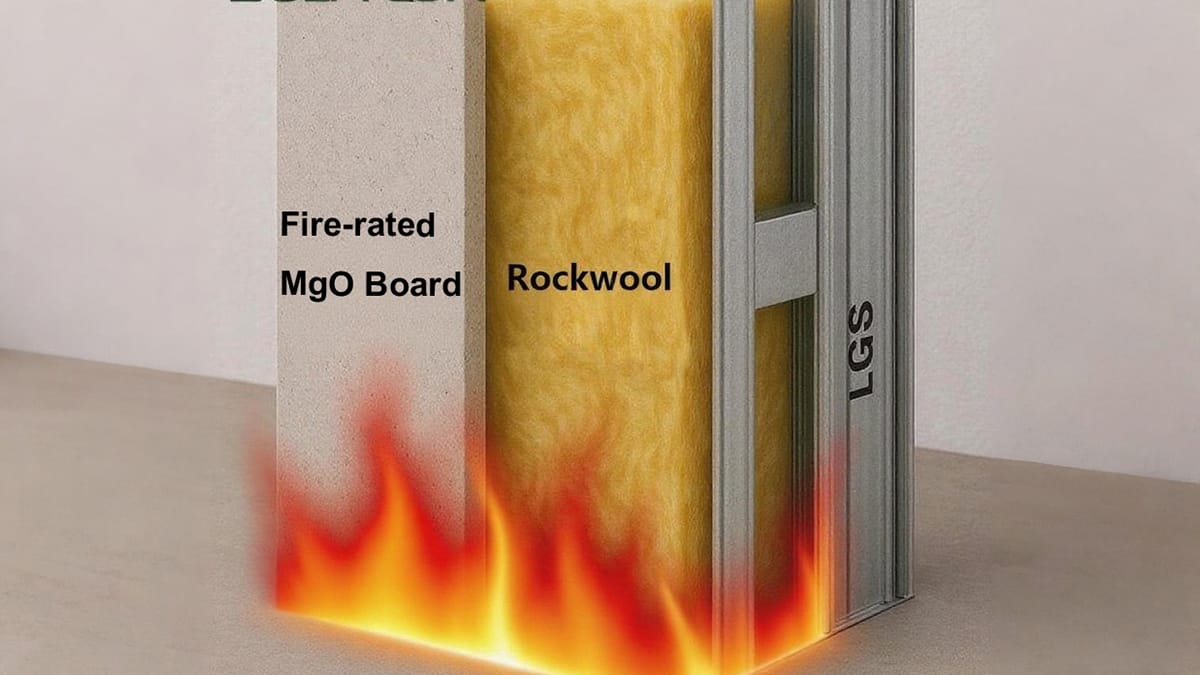 No Smoke or Flame Spread
You want your building to be very safe from fire. Magnesium oxide boards help you reach this goal. These boards do not burn when there is a fire. They make almost no smoke. Flames do not move across the board’s surface. This gives you more time to get away. It helps keep people safe in emergencies.
Magnesium oxide boards work well in fire-resistant walls and enclosures. You can use them in places where fire safety is important. These places include schools, hospitals, and homes. The strong fire ratings make these boards a top choice for safety.
Tip: Pick magnesium oxide board if you want a non-combustible material. It does not add fuel to a fire. You lower the risk of fire spreading. You also keep smoke levels low.
Health and Environmental Safety
You want everyone in your building to stay healthy. Magnesium oxide boards help make the air inside safer. These boards do not have formaldehyde, asbestos, or crystalline silica. You avoid bad chemicals and get better air quality. Magnesium oxide is inorganic, so mold and fungus do not grow. Pests like termites also stay away.
Here is a table showing the health and environmental benefits of magnesium board:
Benefit | Description |
|---|---|
Fire Resistance | Magnesium oxide boards do not burn and make little smoke, so they are safer in fires. |
Mold Resistance | These boards stop mold, which helps keep indoor air healthy. |
Eco-friendliness | Made from natural materials, they do not give off bad chemicals, so they are safe to use. |
Recyclability | You can reuse or recycle them, so there is less waste. |
Energy Efficiency | They insulate well, so you use less energy for heating and cooling. |
Magnesium board has many good points, but there are some downsides. Sometimes, it costs more than regular drywall. You might need special screws or tools to put it in. If you plan your project well, you can avoid most problems and enjoy the fire safety.
Note: Magnesium oxide boards do not give off harmful fumes. You protect your family and workers from toxic smoke during and after a fire.
Using magnesium oxide boards is a smart way to keep people safe and healthy.
You want your building to be safe from fire. Magnesium oxide boards protect very well. Here are the main reasons:
Feature | Description |
|---|---|
Class A1, highest national standard | |
Fire Protection | Stops flames and smoke, cools the environment |
Comparison | Better than plywood, OSB, or drywall |
MgO boards are good for the planet. New technology makes them cleaner and easier to get. Always check fire ratings and certifications before buying. You can find more about fire safety and MgO boards from trusted sources.
FAQ
What makes non-combustible mgo different from other boards?
You get non-combustible mgo boards that do not burn or spread flames. These boards use magnesium oxide, which resists fire better than wood or gypsum. You can trust non-combustible mgo for safer buildings.
Can I use fire-resistant mgo for fire-rated walls in my home?
You can use fire-resistant mgo for fire-rated walls. These boards meet strict fire safety standards. You get strong protection and peace of mind when you choose fire-resistant mgo for your home.
Does non-combustible mgo produce smoke or toxic fumes during a fire?
You stay safe with non-combustible mgo because it does not make smoke or toxic fumes. You get cleaner air and less risk in emergencies. Non-combustible mgo helps protect your health.
Where should I install fire-resistant mgo for best results?
You should install fire-resistant mgo in places with high fire risk. Use it for walls, ceilings, and floors. You get better safety in schools, hospitals, and homes when you pick fire-resistant mgo.
Is non-combustible mgo environmentally friendly?
You help the planet when you use non-combustible mgo. These boards use natural minerals. Non-combustible mgo does not release harmful chemicals. You can recycle non-combustible mgo and reduce waste.
Tip: You get more safety and better air quality with non-combustible mgo. Fire-resistant mgo also helps lower energy costs.
Feature | Non-combustible mgo | Fire-resistant mgo |
|---|---|---|
Fire Safety | Yes | Yes |
Smoke Production | No | No |
Environmental Impact | Low | Low |
You can trust non-combustible mgo and fire-resistant mgo for safe, healthy, and strong buildings.