


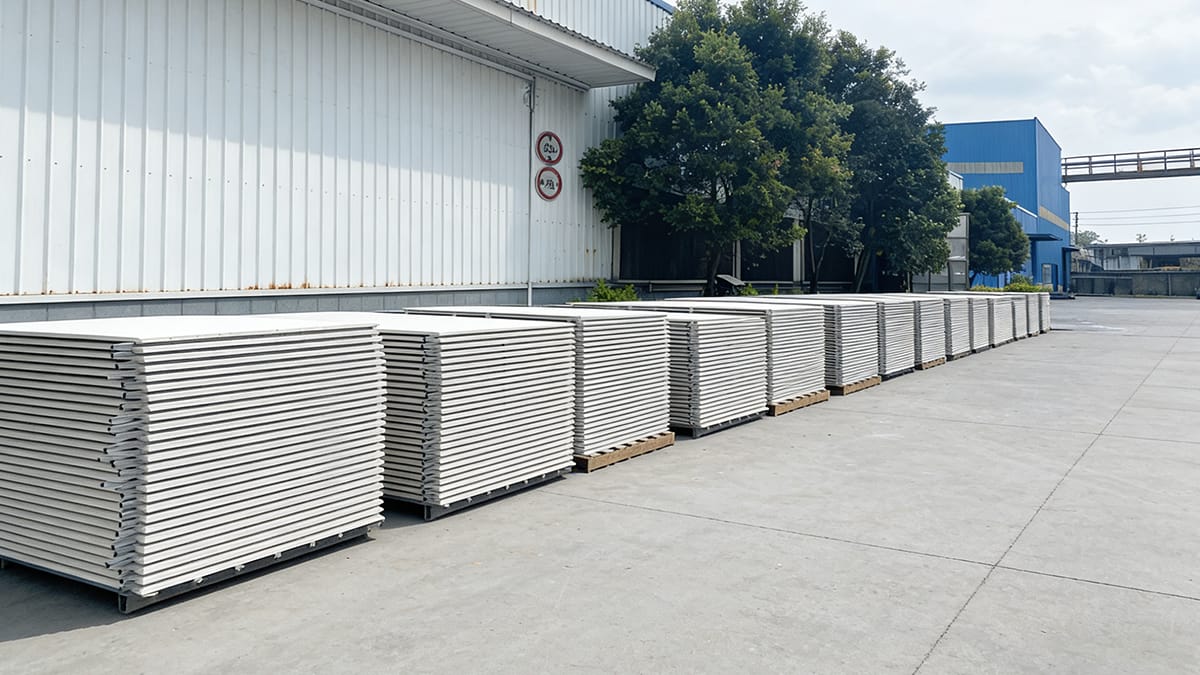
08 Jan Why Magnesium Sulfate Wallboard Stands Out for Fire and Water Protection
Magnesium sulfate wallboard protects well against fire and water. Its special inorganic makeup makes it strong. Your walls are safer because they do not burn or swell easily. This means you worry less about damage. Builders pick this material for many reasons:
It deals with moisture better than some old boards. But it can still take in water. Tests show magnesium boards can get up to 4.5% heavier from water. Older boards can get up to 3.2% heavier.
You can find this wallboard in many places:
Benefits | Examples | |
|---|---|---|
Wall Panels and Partitioning | Easy to put up, strong, stops fire and water, stops mold | Used in green homes for safety and warmth |
Flooring and Substrates | Tough, blocks noise, fireproof, water-resistant | Good for quiet rooms, blocks up to 42dB of sound |
Roofing and Underlayment | Saves energy, fire-resistant, water-resistant | Keeps heat inside, stops leaks and mold |
You feel safer when you use materials that fight fire and water.
Key Takeaways
Magnesium sulfate wallboard is very good at stopping fire. It can last up to 4 hours in high heat. This gives you more time to get out if there is a fire.
The wallboard is made from things that do not let mold grow. This helps keep the air inside your home clean and healthy.
It does not get bigger or change shape when it gets wet. This makes it great for bathrooms and kitchens.
Magnesium sulfate wallboard is simple to put in. You can also recycle it. This makes it a smart pick for builders and people who own homes.
Using this wallboard helps keep your building safe from fire and water. It helps your building stay safe for a long time.
Fire Resistance of Magnesium Sulfate Wallboard
Magnesium Oxide’s High Melting Point
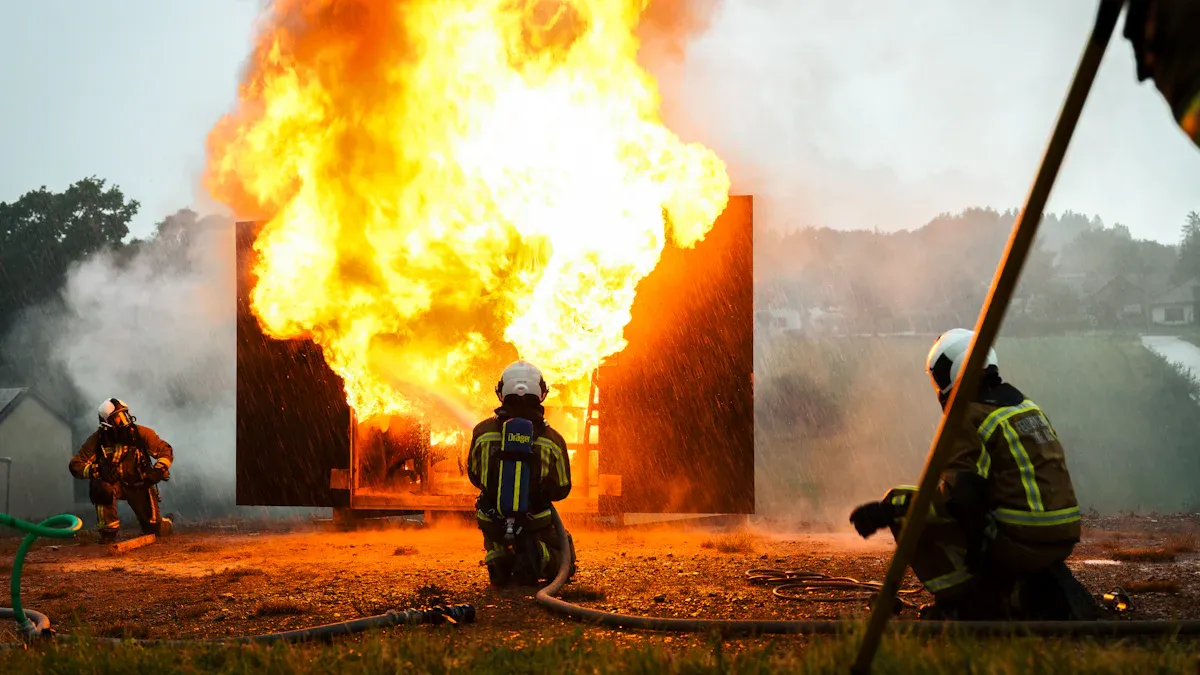
You want walls to stay strong in a fire. Magnesium sulfate wallboard uses magnesium oxide. Magnesium oxide has a very high melting point. It does not melt or burn easily, even in hot fires. Let’s see how magnesium oxide compares to other wallboard materials:
Magnesium oxide: about 2800°C
Gypsum: around 150°C
Plywood: usually 200-300°C
Tip: If the melting point is higher, fire resistance is better. You get more time to escape if there is a fire.
Magnesium oxide does not burn or make dangerous gases. It stays solid when other boards might fail. You can trust magnesium sulfate wallboard to keep its shape and protect your building in a fire.
How Bound Water Slows Fire Spread
You may wonder how wallboards slow down fire. The answer is the water trapped inside the board. Scientists call this “bound water.” When fire heats the wallboard, the bound water turns into steam. This process absorbs heat and slows the fire.
Key Findings | |
|---|---|
Fire resistance of cold-formed steel framed shear walls under various fire scenarios | Gypsum board, made mostly of calcium silicate dihydrate, releases water when heated. This acts as a heat sink and boosts fire resistance. |
Experimental investigation of the fire resistance of multi-layer drywall systems | The high water content in gypsum makes it non-combustible. It slows flames and gives people more time to escape. Standard drywall can resist fire for up to one hour. |
Magnesium sulfate wallboard also has bound water inside. This gives extra fire resistance. The water inside helps stop the fire from spreading fast.
Fire Safety Compared to Gypsum
You want to know how magnesium sulfate wallboard compares to gypsum in real fires. Here are the facts:
Material | Fire Resistance | Moisture Resistance |
|---|---|---|
Magnesium Wallboard | Non-flammable, resists fire for 2-3 hours at high temperatures (up to 1200ºC) | Maintains structural integrity, does not swell or deform when exposed to moisture |
Gypsum Drywall | Good fire resistance but can break down in high heat | Swells and deforms when exposed to water |
Mgo boards have better fire resistance than gypsum boards.
Mgo boards do not burn and make less smoke in a fire.
Gypsum boards may need extra layers or coatings for good fire resistance.
You can see the difference in fire ratings:
Material Type | Fire Resistance Duration |
|---|---|
Magnesium Oxide (MGO) | Up to 4 hours |
Type X Drywall (Gypsum) | At least 1 hour |
12.7 mm Gypsum Board | About 51 minutes |
15.9 mm Gypsum Board | Around 52 minutes |
Two layers Gypsum Board | Up to 79 minutes |
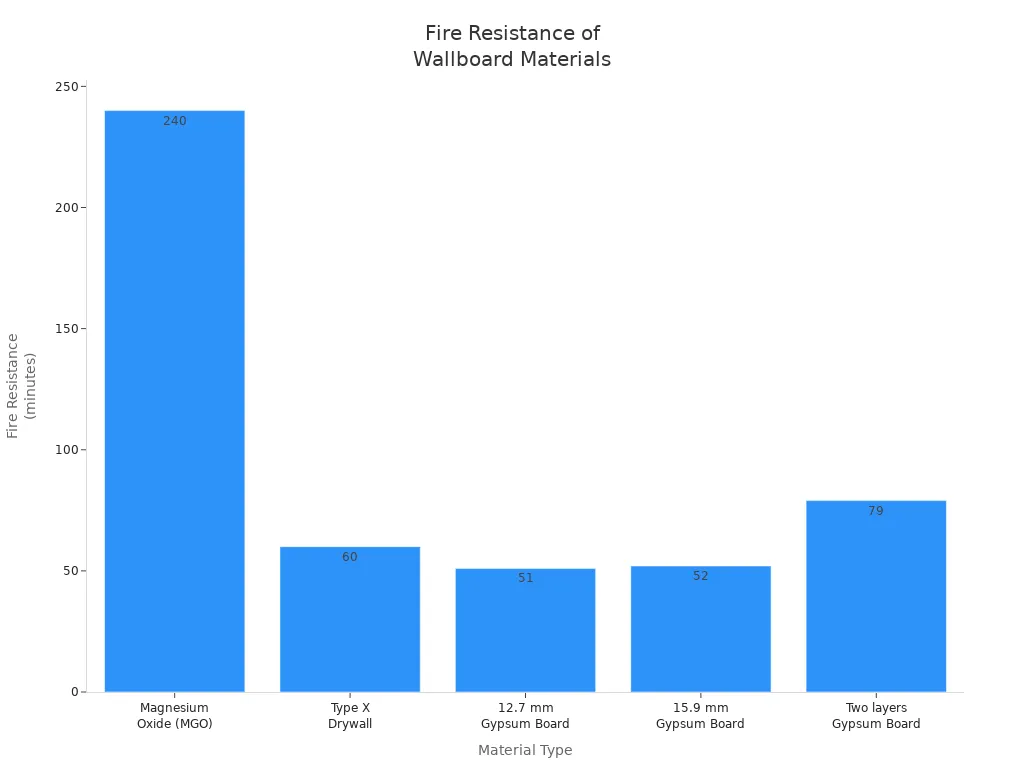
You get much longer protection with magnesium sulfate wallboard. This gives you more time to escape and helps firefighters work. You can count on its fire resistance to keep your building safe.
Moisture Protection of Magnesium Sulfate Wallboard

Inorganic Composition Prevents Mold
You want walls that stay clean and safe. The inorganic makeup of magnesium sulfate wallboard helps with this. Mold needs food to grow, but this board does not give mold spores food. You get a safer space because mold and mildew cannot grow on it.
These boards push water away and stop mold from growing. This makes rooms healthier.
Their inorganic makeup does not let mold spores grow. This means the boards last longer.
Unlike organic boards, magnesium boards do not let mold or mildew grow. Their inorganic makeup does not feed mold spores.
You can see how magnesium sulfate wallboard does better than organic wallboards in lab tests:
Property | Magnesium Sulfate Wallboard | Organic-Based Wallboards |
|---|---|---|
Porosity | Non-porous | Porous |
Alkalinity | High | Variable |
ASTM G21 Fungal Resistance | Perfect score | Varies |
Note: Inorganic wallboards protect better against mold. Organic boards can let mold grow if they get wet.
Resistance to Swelling and Mildew
You want walls that stay strong when wet. Magnesium sulfate wallboard does not swell or bend, even after being wet for a long time. The board keeps its shape and does not break. You do not have to worry about mildew or damage.
Feature | Resistance Level |
|---|---|
Mold and Mildew Resistance | High |
Water Absorption | None |
Swelling | None |
Warping | None |
You can compare magnesium wallboard and gypsum board in mildew tests:
Feature | Magnesium Wallboard | Gypsum Board |
|---|---|---|
Surface Moisture Absorption | 0.34% | Nearly 3% |
Resistance to Water Damage | Excellent (no swelling or warping) | Poor (prone to swelling and warping) |
Mold Resistance | High (resists mold growth) | Low (more likely to get mold) |
Tip: Use moisture resistant wallboards in bathrooms, kitchens, and basements. You will see less damage and need fewer repairs.
Long-Term Durability in Wet Environments
You want walls that last for years, even in damp places. Magnesium sulfate wallboard stands up to water and keeps its strength. Studies show these boards last over 800 days in high humidity without swelling or breaking.
Metric | Magnesium Sulfate Wallboard | Gypsum Boards |
|---|---|---|
Moisture Absorption | 0.34% | 3% |
Durability in High Humidity | Lasted 840 days at 90% humidity and 30°C | N/A |
The boards stay strong in high humidity.
They do not swell or break down over time.
Magnesium wallboard is moisture-resistant. It does not swell, bend, or fall apart when wet.
It stops mold and mildew from growing because it does not have organic parts.
Mgo boards do not bend, crack, or break down over time. This helps them last longer in damp places.
You feel better when you use magnesium sulfate wallboard in wet areas. The board keeps your building safe and strong for many years.
Magnesium Sulfate Wallboard vs. Gypsum Drywall
 Key Differences in Composition
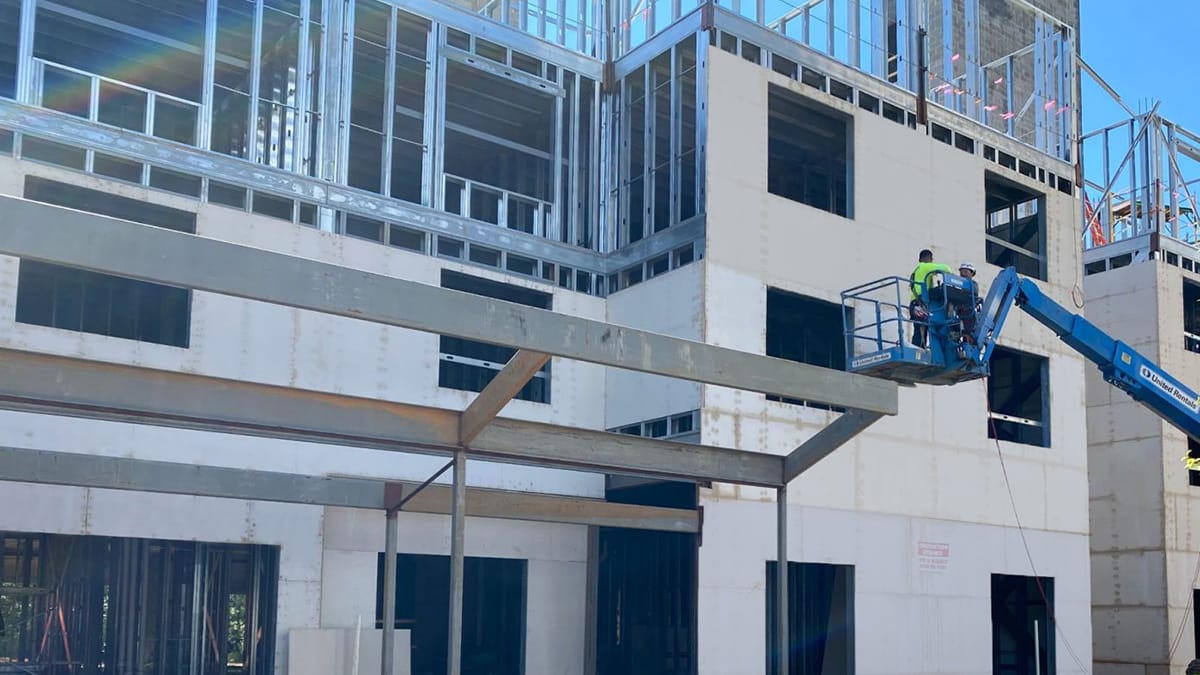 Key Differences in Composition
There are big differences between magnesium sulfate wallboard and gypsum drywall. Magnesium sulfate wallboard has magnesium oxide and sulfate. This makes it a mineral-based material. Gypsum drywall uses calcium sulfate instead. This changes how each board handles fire and water.
Material | Fire Resistance Level | Non-combustible | High Temperature Resistance |
|---|---|---|---|
MgO Boards | Superior | Yes | Up to 1200°C |
Drywall (Gypsum) | Moderate | No | Lower than MgO |
Plywood | Low | No | Burns easily |
OSB Boards | Low | No | Burns easily |
MgO boards do not soak up much water. Gypsum drywall can swell or bend if wet. Magnesium sulfate wallboard lasts longer in bathrooms and kitchens.
Performance in Fire and Water Tests
You may wonder how these boards do in tests. Magnesium sulfate wallboard gets top scores for fire and water resistance. Gypsum drywall does well, but MgO boards do better.
Material | Fire Resistance Rating | Additional Notes |
|---|---|---|
Magnesium Wallboard | A1, up to 1200°F | High, good for fire barriers and wet places |
Type X Gypsum Drywall | 1-4 hours | Used for fire-rated walls and ceilings |
Type C Gypsum Drywall | Over 2 hours | Used for ceilings and tough firewalls |
Material | Additional Notes | |
|---|---|---|
Magnesium Wallboard | High | Good for wet places |
Type X Gypsum Drywall | Low | Used in fire-rated areas |
Type C Gypsum Drywall | Low | Made for tough firewalls |
ASTM E119 is the rule for fire tests. You can trust these ratings when picking materials.
Benefits for Builders and Homeowners
Magnesium sulfate wallboard gives many benefits. Builders like how it works and is easy to care for. You do not need special ways to throw it away. You can recycle the board. MgO boards make less carbon and have no bad chemicals.
Aspect | Gypsum Board | MgO Board |
|---|---|---|
Installation Speed | Quick and simple | Faster with ’tile’ method |
Material Requirements | Needs corner beads and backing | No corner beads or backing needed |
Disposal Costs | Special waste removal needed | Easy and low-cost disposal |
MgO boards are easy to recycle and good for the planet.
You help nature by using mineral-based wallboard.
Homeowners like that it lasts and stops mold.
You save money because you fix it less often.
Tip: MgO boards need skilled workers to install. Make sure your team knows how to lift heavy boards and use special fasteners.
Magnesium sulfate wallboard is safe, strong, and good for the earth. You make a smart choice when you use this wallboard.
You get strong safety with magnesium sulfate wallboard. Its special makeup helps protect walls from fire and water. The board does not let mold grow in wet places. It also does not break down when wet. Here is how it compares:
Property | Magnesium Wall Board | Drywall |
|---|---|---|
Fire Rating | Class A, non-combustible | Combustible |
Moisture Resistance | High | Low |
Mold Resistance | Excellent | Poor |
Pick magnesium sulfate wallboard for buildings that last longer and stay safe.
FAQ
What makes magnesium sulfate wallboard fireproof?
Magnesium oxide makes the board melt at very high heat. The board does not burn or make dangerous smoke. This helps keep your building safe if there is a fire.
Can you use magnesium sulfate wallboard in wet areas?
You can use it in bathrooms, kitchens, and basements. The board does not soak up water or change shape. Your walls stay strong and last a long time in wet places.
Does magnesium sulfate wallboard prevent mold growth?
Mold cannot grow because the board has no organic stuff. Mold spores do not get food from it. You get cleaner air and rooms that are healthier.
Is magnesium sulfate wallboard easy to install?
You put it up like regular drywall. Sometimes you need special fasteners for heavy boards. Builders say it is quick and easy to install.
How does magnesium sulfate wallboard compare to gypsum drywall?
Feature | Magnesium Sulfate Wallboard | Gypsum Drywall |
|---|---|---|
Fire Resistance | High | Moderate |
Moisture Proof | Yes | No |
Mold Proof | Yes | No |
You get stronger fire and water protection with magnesium sulfate wallboard.