


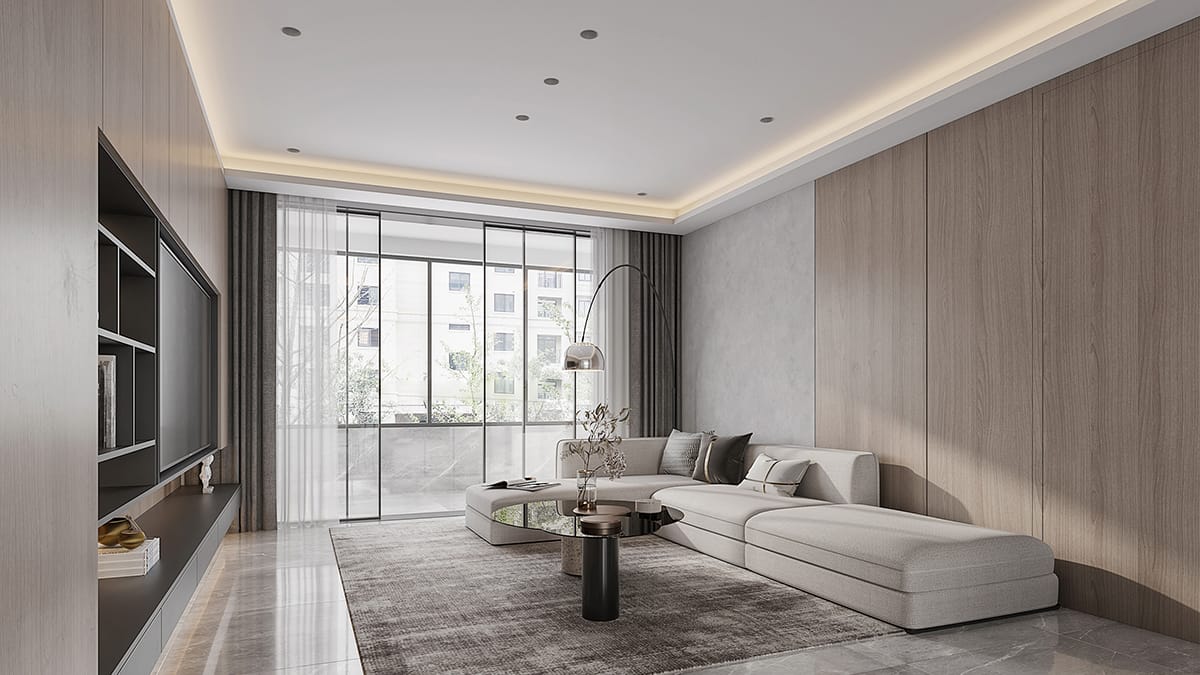
14 Sep Modular Wall Panel Systems: Choosing Decorative Interior Finishes
“Modular wall panel” can describe a complete wall assembly, a factory-made section, or one board used inside that assembly. For a modular manufacturer, those are different purchasing and engineering decisions. A decorative lining creates the visible interior surface, while the frame, structural layers, cavity materials, membranes, joints and fasteners perform other roles.
This guide focuses on modular decorative wall panels used as interior linings. It explains how to define the lining role, compare melamine-paper and HPL faces, and prepare the information a supplier needs. It does not treat one decorative board as a complete wall system.
Start with the layers in the modular wall build-up
A useful specification begins with a wall section, even when the decorative panel is the only item being quoted. The section shows where the panel sits and which party is responsible for each interface. Typical roles to identify include:
Frame and support
The project team defines the supporting frame, member spacing, allowable movement and the surfaces available for fixing. These details should come from the approved modular design.
Structural and enclosure layers
Sheathing, membranes and other enclosure components are selected for their assigned functions. A decorative face does not establish that the lining has one of those roles.
Cavity and insulation
The cavity may contain insulation, services or additional components specified by the wall designer. The decorative lining should not be described as providing their system-level functions.
Interior decorative lining
This is the visible board and finish discussed in this guide. Its coordination inputs include substrate, face, dimensions, edge treatment, joint layout and sample reference.
When these roles are written down, the quotation can refer to the actual lining instead of using “modular panel” as a catch-all term. The same separation helps the responsible designer decide which documents are needed for the individual product and which are needed for the complete assembly.
Decorative lining and structural sheathing are different specifications
Sulfycor Decorative uses a magnesium oxysulfate MgO board substrate with a melamine-paper or HPL decorative face. In the modular-house context covered here, it is considered as an interior lining. The visible face, board substrate and wall build-up should still be recorded separately.
The material name alone does not assign a structural role. If the buyer expects a board to brace a frame, carry a load or form part of a documented wall construction, that expectation must be stated and reviewed against the relevant product and assembly evidence. A report for a bare MgO substrate also does not automatically describe every finished panel, adhesive, edge condition or wall configuration.
For broader coordination of MgO products across a factory-built wall, see the MgO board for modular house applications guide. The article you are reading stays with the decorative interior layer and the inputs needed to quote it.
Choose the face: melamine-paper or HPL
The choice between a melamine-paper face and an HPL face should start with the approved finish reference and project requirements. Do not assume that a general material label settles appearance, cleaning, wear or compliance questions for every configuration. Ask the supplier what evidence and sample options are available for the proposed face, substrate and adhesive combination.
Melamine-paper faced option
Use the sample code or approved reference to define colour, pattern and texture. Confirm the proposed board dimensions, edge treatment, joint appearance and cleaning expectations for the actual room type.
HPL faced option
Define the HPL reference, surface appearance and any project-specific documentation requested by the buyer. Confirm how the chosen face affects the quoted panel construction, edges, samples and production approval.
Woodgrain, stone-look and metallic-effect descriptions are appearance references. They do not mean the panel is solid wood, stone or metal. Screen colours can also vary, so a physical sample or another agreed control reference should be approved before production.
The MgO decorative wall panel overview provides the product-family context. For a project enquiry, the finish name should be accompanied by a sample reference, required dimensions and the intended wall build-up.
Coordinate joints, edges and factory interfaces
Joint appearance is part of the interior design, but the joint is also an interface between the board, support and installation sequence. The modular producer should define the acceptable layout and approve the final detail. Useful questions include:
- Will joints be expressed, covered or incorporated into another approved detail?
- Which edge condition is expected at field joints, corners, openings and connections to ceilings or floors?
- Where can the lining be supported and fixed within the approved frame design?
- How will doors, services, cabinets and other attachments interact with the lining and the support behind it?
- Which dimensions or tolerances must be supplied by the module designer before production?
A supplier can use these answers to review manufacturability and the requested finish. The article does not prescribe fastener type, spacing, joint width or installation tolerances because those values depend on the approved panel configuration and wall design.
Plan transport protection and installation sequence
Factory-made modules pass through handling, storage, transport and site connection stages. The visible lining may be installed before shipping, after module assembly or at another point chosen by the producer. That sequence affects which surfaces and edges need protection and when inspections can occur.
Before approving the decorative panel package, coordinate these items with the modular producer:
- Packaging unit: how panels will be grouped, labeled and matched to modules or rooms;
- Surface protection: what protection is compatible with the selected face and when it should be removed;
- Handling route: board orientation, lifting steps and areas where edges may be exposed to impact;
- Inspection points: when finish, dimensions and visible damage will be checked;
- Replacement access: whether the approved wall detail permits a lining panel to be reached later without making assumptions about the rest of the assembly.
These are coordination questions, not universal instructions. Packaging, lifting, fixing and replacement methods should be confirmed for the order and the producer’s manufacturing process.
Specification checklist for modular decorative wall panels
A complete enquiry reduces back-and-forth and helps prevent a finish sample from being mistaken for a full technical specification. Send the following information where available:
- Wall build-up: a drawing or written layer sequence showing the intended position of the decorative lining.
- Panel role: confirmation that the quoted item is an interior lining, plus any additional role that requires separate review.
- Dimensions: required panel sizes, thickness request and quantity by size.
- Finish: melamine-paper or HPL preference, sample code, colour, pattern and texture reference.
- Edges and joints: the desired visible result and any producer-defined interface requirements.
- Openings and attachments: locations that may affect cutting, support or panel coordination.
- Project requirements: country, intended room use and the documents the responsible reviewer needs for the product or assembly.
- Approval sequence: sample review, mock-up requirements if any, decision makers and target dates.
- Commercial inputs: total quantity, packing groups, destination and required delivery schedule.
If a required value is still unknown, mark it as pending rather than replacing it with a generic assumption. The supplier can then identify what must be resolved before the finish and panel construction are confirmed.
Frequently asked questions
Is a decorative MgO panel a complete modular wall?
No. In this article it is the visible interior lining within a wall build-up defined by the modular producer. The frame, structural layers, cavity components, membranes and connections are separate parts of the design.
Can the decorative lining also be treated as structural sheathing?
Do not infer that role from the MgO substrate or the decorative product name. State the required role and have the proposed product and wall evidence reviewed for that use.
Which face should a modular manufacturer choose?
Compare the melamine-paper and HPL options against the approved appearance, room requirements, sample process, panel construction, edges and requested documents. Confirm the exact proposed configuration rather than relying on the face name alone.
What should be sent for a quotation?
Send your wall build-up, panel sizes, finish reference and project quantity. Add the intended room use, edge or joint preference, destination, schedule and document requirements so the lining can be reviewed in context.