


06 Dec MgO Board vs Cement Board: Differences, Uses & Cost
MgO board and cement board are different mineral-based panels, and neither is the best choice for every job. Compare the named products for the same application: their binder, moisture and fire evidence, strength, weight, installation details and delivered cost. A tile backer, an exterior cladding sheet and a structural subfloor are not interchangeable simply because each is called a board.
This guide compares MgO board with two common meanings of “cement board”: fiber-cement sheet and cement-based tile backer. For a detailed explanation of fire classifications and hourly ratings, see cement board fire rating and tested assemblies.
Updated 25 November 2026 · By Sulfycor, a magnesium oxysulfate board manufacturer. Product examples and test results below are identified rather than applied to every material in a category.
MgO board vs cement board: quick comparison
| Decision factor | MgO board | Fiber cement / cement backer board |
|---|---|---|
| Binder | Magnesium-based cement; common systems include oxychloride and oxysulfate. | Cement-based matrix with reinforcement and fillers; construction varies by product. |
| Typical roles | Specified sheathing, lining, underlayment, subfloor, decorative substrate or SIP facing. | Fiber-cement sheets may serve cladding or lining roles; backer boards provide a base for tile in specified systems. |
| Moisture | Depends on formulation, curing and exposure. Check absorption, movement, wet strength and durability. | Check the grade and approved exposure. Water durability does not automatically make the entire installation waterproof. |
| Fire | Use the actual material classification and any required assembly rating. | Use the actual material classification and any required assembly rating. A category name has no universal hourly rating. |
| Structural use | Requires suitable product and system design information. | Do not assume a tile backer or cladding sheet provides structural capacity. |
| Weight and handling | Compare actual thickness, density, sheet size and cutting instructions. | Compare the same factors; “cement board” is too broad for one weight or cutting claim. |
| Cost | Compare delivered and installed cost for the defined specification. | Include locally available sizes, accessories, finishing and labor on the same basis. |
What kind of cement board are you comparing?
“Cement board” is a broad purchasing term. Identify the actual product before comparing it with MgO.
- Fiber-cement sheet: cement, fibers and fillers formed into a sheet. Products are made for different cladding, lining and other specified uses.
- Cement tile backer: a cement-based panel designed to support tile as part of a defined installation. Not every backer is intended for exposed exterior cladding or structural flooring.
- Cement-bonded particle board: another product family. Do not treat its properties as those of all fiber-cement sheets or tile backers.
For example, USG describes Durock cement board with EdgeGuard as a water-durable tile base for listed applications. That product-specific description is more useful than a claim that all cement boards perform identically.
What makes MgO board different?
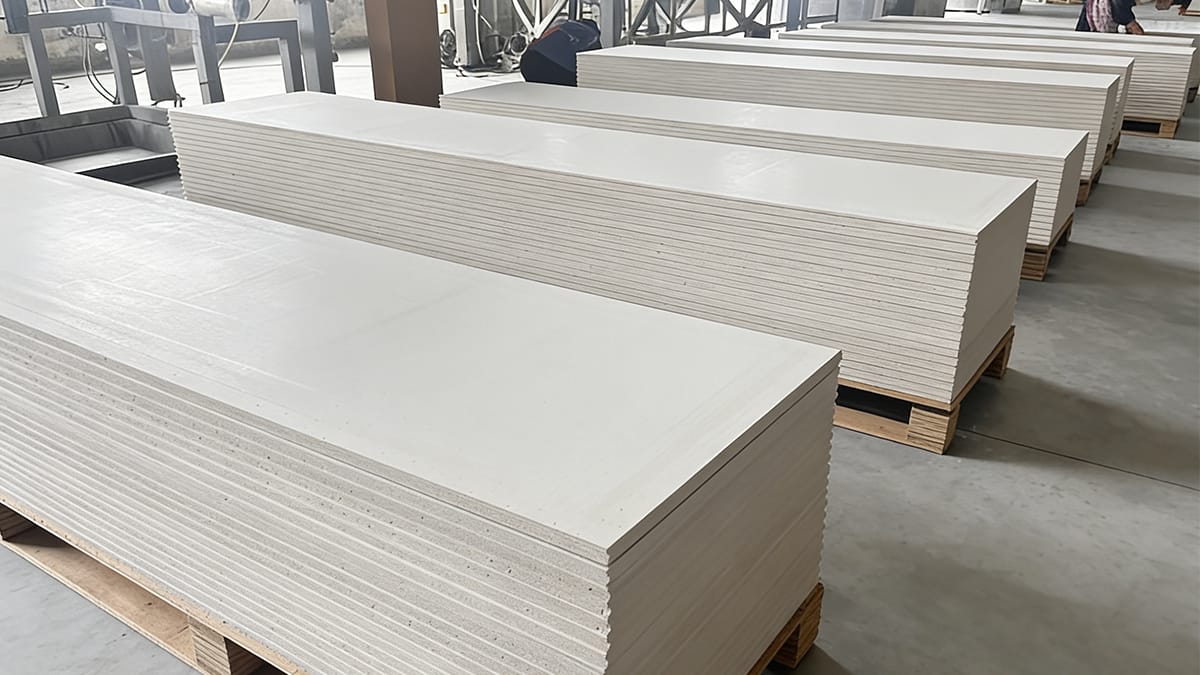 MgO boards use magnesium-based cement rather than the cement matrix used in conventional fiber-cement products. Magnesium oxychloride and magnesium oxysulfate are two common binder families. Reinforcement, fillers, formulation and curing affect the finished board.
Sulfycor manufactures magnesium oxysulfate boards. This identifies the binder approach; it does not establish universal waterproofing, structural capacity or acceptance by every authority. See the MgO board guide for composition and application details.
Which board performs better in moisture?
There is no reliable category-wide winner. Compare the selected product’s moisture tests with the actual exposure: a brief wetting test, freeze-thaw cycling and prolonged warm-water immersion are different conditions.
BRANZ compared four MgO products with fiber-cement results. Its research found different outcomes between the MgO products and between test conditions. Some MgO products performed comparably with fiber cement in freeze-thaw and soak-dry testing, while the tested MgO products performed worse in prolonged warm-water immersion. These findings concern the samples and methods studied, not every current board.
Read BRANZ Research Now, Materials #4. The practical lesson is to request relevant evidence rather than select either category from a generic “waterproof” claim.
For showers, confirm the backer, waterproofing system, joints and tile installation. For exterior walls, confirm the sheet grade, permitted exposure, weather protection and fasteners. Neither the board’s name nor a single water test replaces those details.
Does MgO board have a better fire rating?
Not automatically. Both product families include boards with documented fire performance, but comparisons must use the same kind of evidence. Surface-burning results, non-combustibility and hourly assembly ratings are different measures.
For example, James Hardie identifies its Hardie Backer boards as non-combustible when tested to ASTM E136. Sulfycor’s listed sample reports include EN 13501-1 Class A1 and ASTM E84 Flame Spread Index 0 / Smoke Developed Index 0. These product examples do not establish a universal ranking between the categories.
An hourly rating concerns a specified construction. UL explains that fire-resistance ratings apply to complete assemblies and that their components must meet the design requirements. See UL’s component-identification guidance, the Sulfycor report library, and our cement board fire-rating explanation.
Which board is stronger, and can it be structural?
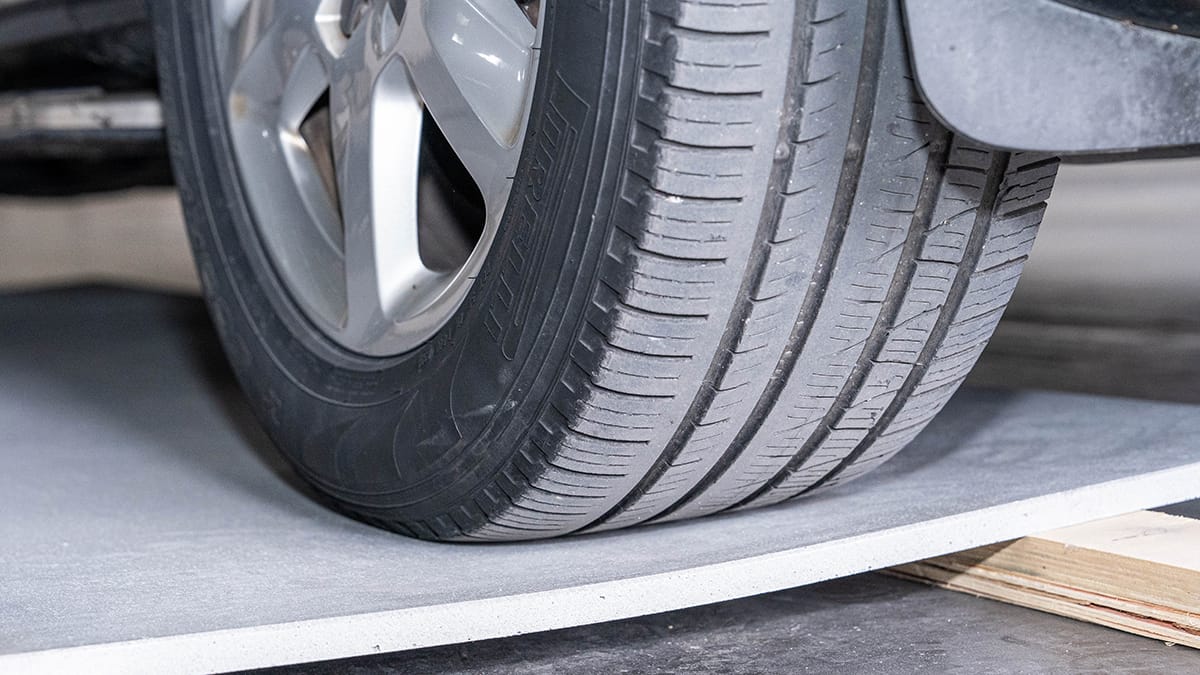 Compare the property the application needs. Bending strength measures resistance to failure under bending; modulus of elasticity describes stiffness. Neither value alone establishes a permitted floor span, wall racking capacity or fixing layout.
For reference, Intertek report 241203010SHF-001, issued 20 January 2025 for a submitted 12 mm Sulfycor magnesium sulfate board sample, reports average flexural strengths of 20.5 MPa in equilibrium conditioning and 18.1 MPa in wet conditioning under ASTM C1185-23. These are sample results, not design values for every Sulfycor board or a direct comparison with an untested cement board. Review the physical-performance report.
A tile-backing sheet is not automatically a structural subfloor. For either material, check loads, support spacing, thickness, joints and connections against suitable design documentation. For specified Sulfycor underlayment and subfloor options, see sanded MgO boards.
Is MgO board lighter or easier to install?
It can be, but compare actual panel mass and installation instructions. Density, thickness, sheet dimensions and reinforcement all affect handling. The labels “lightweight” and “cement board” do not provide enough information.
For a uniform sheet, approximate mass per square metre equals density in kg/m³ multiplied by thickness in metres. For example, a hypothetical 12 mm sheet at 1,000 kg/m³ weighs about 12 kg/m² before added finishes. This is a calculation example, not a declared product weight.
Use the manufacturer’s specified cutting method, dust controls, fasteners, joint products and edge distances. Do not assume every MgO board is silica-free or that every cement-based product can be cut and fixed in the same way. Our installation guidance is a starting point for confirming the selected Sulfycor board.
Which board costs less?
Compare quotations for the same job and delivery basis. The least expensive sheet may not produce the least expensive finished construction once freight, handling, waste, accessories, waterproofing, fixing and finishing are included.
Record the board type, thickness, size, surface, edge profile, quantity and destination. Then compare installed system costs. A price from a different market, thickness or panel type is not a dependable benchmark. See MgO board quotation inputs for budgeting information.
Which board should you choose for your application?
| Application | Decision that matters |
|---|---|
| Shower or tiled wet area | Choose a backing product with suitable installation documentation and the required waterproofing system. |
| Exterior cladding or sheathing | Use a product assessed for the exposure and wall system; check weathering, moisture movement and fixing details. |
| Structural subfloor | Require load, stiffness, support and connection information. Do not substitute a non-structural backer. |
| Fire-resistance-rated construction | Follow a design that permits the named product and specified installation. |
| Decorative interior panel or SIP | Evaluate the finished panel, including facing, adhesive, core or connections as applicable. |
If a specified fiber-cement or backer system already meets the project requirements, replacing it needs a clear technical and commercial reason. A verified MgO product may be an alternative where its evidence matches the proposed role. Check local approval and warranty conditions before substitution; our regional MgO restrictions guide explains why these checks matter.
Frequently asked questions
Is MgO board the same as fiber cement board?
No. They use different binder systems and product specifications. Compare the exact products rather than treating the two names as equivalent.
Can MgO board replace cement tile backer?
Only where the proposed board is suitable for the tile installation and its use is accepted by the relevant designer and system requirements. Confirm joints, adhesives and waterproofing as well as the sheet itself.
Is fiber cement always better outside?
Exterior-grade fiber-cement products are available, but not every sheet or backer has the same exposure classification. Any MgO alternative likewise needs evidence for the proposed exterior use.
Does chloride-free mean no moisture testing is needed?
No. Binder chemistry does not establish the complete board’s moisture durability, structural performance or project acceptance.
Sources and product documents
The comparison uses the linked BRANZ research, manufacturer product documentation and UL guidance. Sulfycor values are identified sample results available through our technical document library. Research results should be read with their sample and conditioning limits.
To review a supply specification, compare Sulfycor’s board types and send the application, dimensions, quantity and destination through the contact page.