



27 Aug What the Flame Spread Index Means for Magnesium Wall Boards
The flame spread index shows how quickly fire moves on a material. In buildings, magnesium oxide sheathing board is very safe from fire. It gets a flame spread index of zero. This means the sheathing does not let flames move. It helps buildings follow strict safety rules. Magnesium oxide sheathing board does not burn. It does not help fire grow.
Fire Rating Class | Flame Spread Index (FSI) | Typical Applications |
|---|---|---|
Class A | 0–25 | Hospitals, schools, tall buildings, exit hallways, stairs, elevator shafts, and outside walls in apartment buildings |
Magnesium oxide sheathing board is great for fire safety. It does not burn and has the lowest flame spread index. Builders use these boards to keep people safe and make following rules easier.
Key Takeaways
Magnesium oxide sheathing board has a flame spread index of zero. This means fire cannot move across its surface. This board does not burn and stays strong in high heat. It is safer than many other wall materials. Fire-resistant MgO boards make very little smoke. They do not give off harmful gases. This helps keep people safe during fires. Builders use magnesium oxide sheathing board to follow strict fire safety rules. It helps protect buildings and the people inside. Picking wall boards with a low flame spread index like MgO helps stop fire damage. It also saves money over time.
Flame Spread Index

Definition
The flame spread index measures how far and how fast flames move across the surface of a building material. This number comes from tests that compare the burning behavior of the material to two standards: red oak, which has a value of 100, and asbestos-cement board, which has a value of zero. The flame spread index does not show the actual speed of the fire but gives a way to compare how different materials react when exposed to flames. Architects and fire protection engineers use this number to choose safe materials for buildings. When a sheathing like magnesium oxide sheathing board has a low flame spread index, it means the material does not help fire move quickly. This helps keep people and property safe.
ASTM E84 Test
The ASTM E84 test, also called the Steiner Tunnel Test, is the main way to measure the flame spread index for sheathing and other building materials. The test uses a long tunnel where a sample of the sheathing is placed on the ceiling. The steps include:
Condition the sheathing sample at a set temperature and humidity.
Preheat the tunnel, then cool it to the right temperature.
Mount the magnesium oxide sheathing board in the tunnel with the exposed side facing down.
Set up airflow through the tunnel.
Preheat the sample with airflow for a short time.
Ignite a burner at one end of the tunnel.
Keep the burner on for ten minutes.
Watch and record how the flame moves along the sheathing.
Measure smoke with a special device.
Record temperature data near the sample.
This test gives a clear, repeatable way to see how the sheathing reacts to fire. The results help builders and inspectors know if the magnesium oxide sheathing board meets safety rules for fire resistance.
Class A Rating
Materials receive a class rating based on their flame spread index and smoke development during the ASTM E84 test. The highest level is the class a rating. To earn this, a sheathing must have a flame spread index between 0 and 25 and a smoke development rating no higher than 450. The table below shows these requirements:
Class | Flame Spread Index (FSI) | Smoke Development Rating |
|---|---|---|
Class A | 0 – 25 | Maximum 450 |
Magnesium oxide sheathing board often achieves a flame spread index of zero, which means it does not let flames move across its surface. This level of fire resistance is rare among wall boards. When a sheathing has a class a rating, it offers the best flame resistance and helps buildings meet strict fire codes. Builders trust magnesium oxide sheathing board for its ability to slow fire spread and protect building occupants.
Note: Choosing sheathing with a low flame spread index and high fire resistance, like magnesium oxide sheathing board, is key for safe construction and code compliance.
Magnesium Oxide Sheathing Board Performance
Fire-Resistant MgO
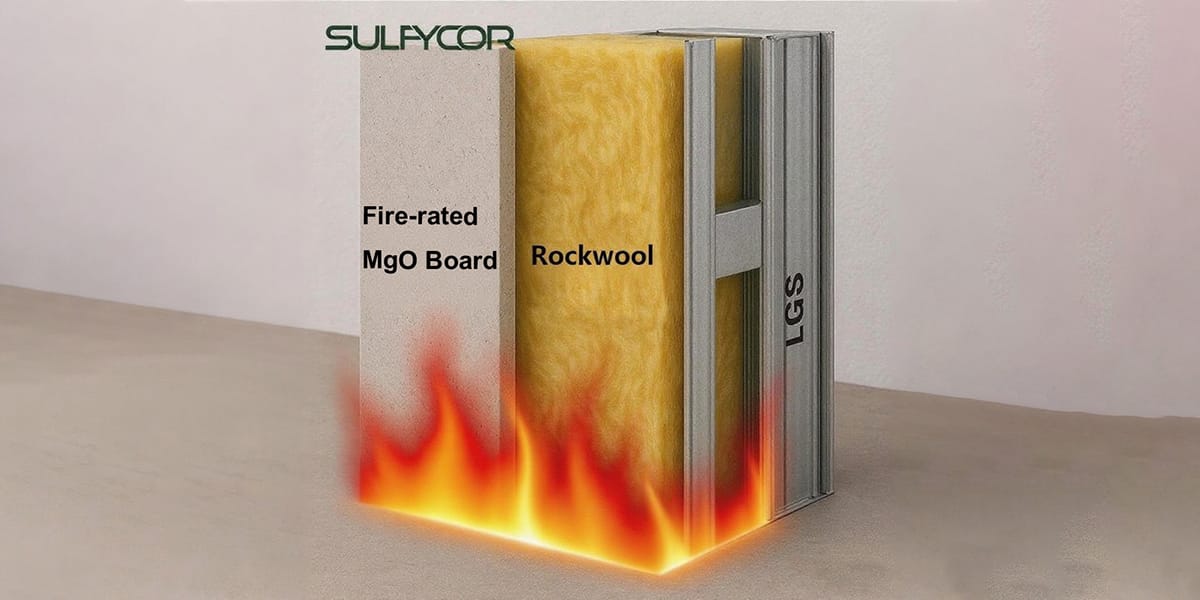
Magnesium oxide sheathing board is special because it resists fire. Fire-resistant MgO boards have a flame spread rating of zero. This means flames cannot move across them. They work better than most other wall materials. In lab tests, magnesium oxide sheathing board stayed strong and kept its shape during big fires. The table below shows how fire-resistant MgO boards compare to other wall boards:
Property/Material Aspect | Magnesium Oxide (MgO) Boards | Gypsum Board | Cement Board | Plywood | OSB |
|---|---|---|---|---|---|
Fire Resistance | Superior, up to 4 hours | Medium | High | Low | Low |
Thermal Stability | Withstands heat up to 1200°C | Lower | Moderate | Low | Low |
Combustibility | Noncombustible (Class A rating) | Combustible | Combustible | Highly combustible | Highly combustible |
Smoke and Toxicity | No harmful gases or smoke | Emits smoke | Emits smoke | Emits smoke | Emits smoke |
Structural Integrity in Fire | Maintains strength and shape | Weaker under high heat | May crack or break | Weakens quickly | Weakens quickly |
Fire Resistance Level (FRL) in LSF walls | Lower (gypsum) | Lower (cement) | Not fire resistant | Not fire resistant |
Fire-resistant MgO boards give great protection. They do not burn, melt, or make dangerous smoke. Builders use these boards in important places like stairs, hallways, and outside walls.
Noncombustibility
Non-combustible MgO boards follow tough rules for safety in buildings. Magnesium oxide sheathing board passes tests like ASTM E84 and EN 13501-1. These tests give it a Class A and A1 rating. These ratings show it does not burn or help fire spread. Non-combustible MgO does not make fires worse. Its minerals stop burning without needing extra chemicals. When fire touches magnesium oxide sheathing board, it lets out water vapor. This cools the board and slows down flames. This helps keep buildings safe from fire.
Feature | Magnesium Oxide (MgO) Boards | Plywood |
|---|---|---|
Combustibility | Non-combustible | Combustible |
Temperature Resistance | Vulnerable to heat | |
Fire Resistance | Maintains strength up to 4 hours | Variable; requires fireproofing |
Fire Spread | Does not contribute to fire spread | Catches fire easily and spreads |
Non-combustible MgO boards make very little smoke during a fire. This keeps people safe from bad gases and helps them get out quickly.
Tip: Non-combustible MgO boards help buildings meet fire codes and insurance rules. Their safety features make them a top pick for fireproof walls.
High Temperature Resistance
Fire-resistant MgO boards can handle very high heat. Magnesium oxide sheathing board stays strong up to 1200°C. The melting point of non-combustible MgO is about 2,800°C. This means it does not lose shape or strength in a fire. Fire-resistant MgO boards pass hard tests like ASTM E119 and ASTM E84. They do not let flames spread or make toxic smoke.
Magnesium oxide sheathing board can take heat up to 1,472°F (800°C) without breaking down.
Non-combustible MgO does not burn, melt, or make dangerous fumes.
Fire-resistant MgO boards stay strong for four hours in a fire.
These boards give off water vapor, which helps stop fire and cools things down.
When there is a fire, magnesium oxide sheathing board gives off water vapor. This helps stop flames and cools the area. This makes the board even safer and keeps it strong. Non-combustible MgO boards work well in fire-rated walls, ceilings, and other places where safety matters most.
Note: Fire-resistant MgO boards are the best for fire safety, noncombustibility, and handling high heat. Builders pick magnesium oxide sheathing board for strong protection in tough places.
Fire Safety and Comparison
 MgO vs. Gypsum
 MgO vs. Gypsum
Magnesium oxide sheathing board is better than gypsum board for fire safety. Fire-resistant MgO gets a Class A rating in fire tests like ASTM E84. This means it stops fire from spreading and keeps people safe. Gypsum board can get weak when it gets very hot. Fire-resistant MgO stays strong and does not change shape, even in big fires. Gypsum board can lose its fire resistance if it gets wet. Walls made with magnesium oxide sheathing board give better safety and last longer. Builders pick fire-resistant MgO for walls and places where fire safety is very important.
MgO vs. Plywood
Fire-resistant MgO is much safer than plywood in a fire. Non-combustible MgO does not catch fire or help flames move. Plywood, even if treated, can still burn and gets weak fast in a fire. Fire-resistant MgO can handle heat over 1000°C. Plywood burns, makes smoke, and gives off bad gases. The table below shows the main differences:
Feature | Magnesium Oxide Sheathing Board | Plywood |
|---|---|---|
Combustibility | Non-combustible MgO | Combustible |
Flame Spread Index | High | |
Fire Resistance | Superior (fire-resistant MgO) | Low |
Smoke Development | Minimal | Significant |
Structural Integrity in Fire | Maintains strength | Weakens and burns |
Walls made with fire-resistant MgO give the best fire safety. Drywall made from non-combustible MgO keeps walls strong during a fire.
Real-World Fire Safety
Fire safety in buildings depends on picking the right sheathing. Magnesium oxide sheathing board meets or beats fire safety rules from groups like the ICC and NFPA. Fire-resistant MgO passes hard tests like ASTM E119 and stays strong up to 3000°F. Builders use fire rated drywall and outside sheathing made from non-combustible MgO in tall, business, and home buildings. These materials help stop fires and keep people safe. Fire-resistant MgO does not need extra chemicals to stop fire. It also fights water and mold, which helps keep buildings safe for a long time. Walls made with fire-resistant MgO lower damage and make buildings safer for everyone. As rules change, fire rated drywall and outside sheathing made from non-combustible MgO keep leading in fire safety.
Tip: Fire-resistant MgO and magnesium oxide sheathing board give the best safety for fire-rated walls, so they are the best choice for keeping buildings safe.
Magnesium oxide sheathing boards are very safe for buildings. They do not let fire spread fast. This gives people more time to get out. These boards help buildings follow tough safety rules. Builders and insurance companies like MgO boards. They last a long time and do not make much smoke. MgO boards save money over time.
MgO boards do not get damaged by water or mold.
These boards help make buildings safer and better for the environment.
They also help save money.
Picking wall boards with a low flame spread index keeps people and buildings safe.
FAQ
What does a zero flame spread index mean for magnesium oxide sheathing board?
A zero flame spread index means fire cannot move on the board. This makes magnesium oxide sheathing board very good at stopping flames. It helps keep buildings safe from fire. Builders use this board for fireproof walls and safe rooms.
How do fire-resistant MgO boards compare to fire rated gypsum board?
Fire-resistant MgO boards are better at stopping fire than gypsum board. MgO boards do not burn and stay strong in a fire. They make very little smoke when burning. These boards are great for walls where fire safety is important.
Why is noncombustibility important in building applications?
Noncombustibility stops fire from spreading in buildings. Magnesium oxide sheathing board does not burn or help fire grow. This makes it a good choice for fireproof walls and safe drywall.
Can magnesium oxide sheathing board be used in fire rated exterior sheathing?
Magnesium oxide sheathing board works well for outside fireproof walls. It can take high heat and has a class A rating. This board helps buildings follow strict fire safety rules.
Does magnesium oxide sheathing board produce harmful smoke during a fire?
Magnesium oxide sheathing board makes very little smoke in a fire. It does not give off dangerous fumes. This helps people get out safely during a fire.