


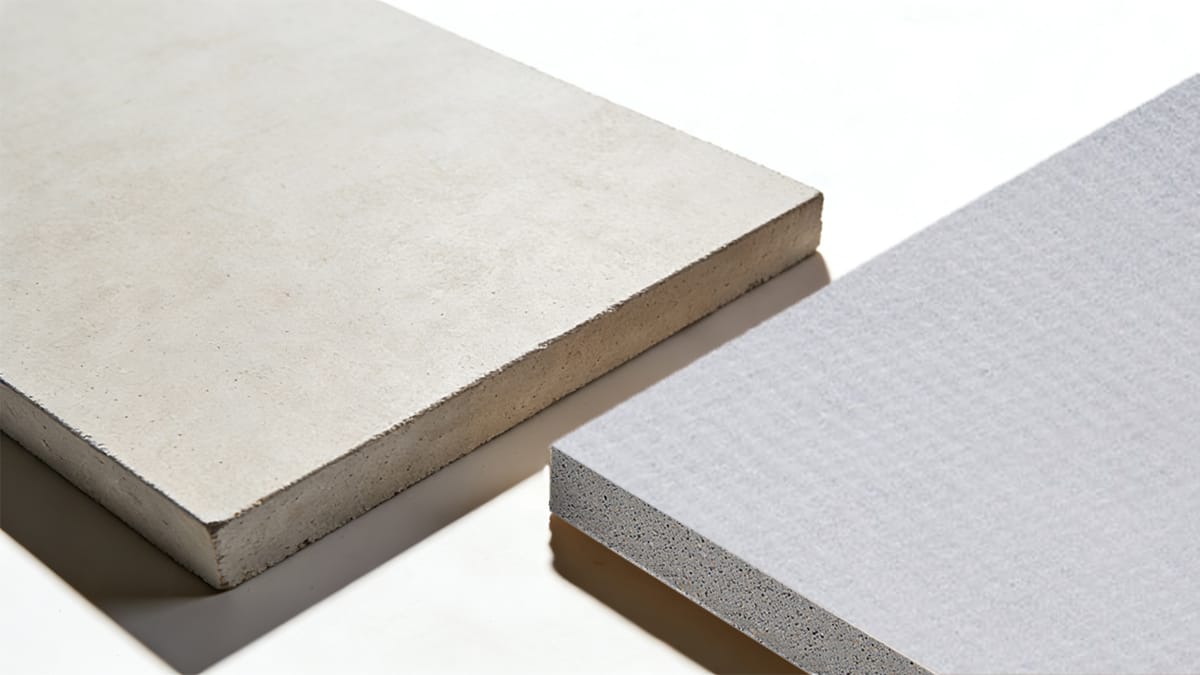
05 Mar Magnesium Oxide Board vs Gypsum Board Which Performs Better in 2026
Table of Contents
When you look at magnesium oxide board vs gypsum board, magnesium oxide board works better in 2026. Magnesium oxide board has stronger fire resistance. It also gives better moisture protection. Magnesium oxide board is tougher than gypsum board. New changes make magnesium oxide board more trustworthy and better for the environment. More people are using magnesium oxide board vs gypsum board because builders like its safety features. Gypsum board still costs less money. But magnesium oxide board vs gypsum board does better in hard places. If you want good performance and care about the planet, magnesium oxide board vs gypsum board is a smart pick. You should think about using gypsum board for cheaper projects. But use magnesium oxide board vs gypsum board if you want it to last longer.
Key Takeaways
Magnesium oxide board is better at stopping fire. It stays strong even when it gets very hot. Gypsum board does not last as long in heat.
Magnesium oxide board works well in wet places. It keeps out water and stops mold from growing. This makes it great for bathrooms and kitchens.
Magnesium oxide board costs more at first. But it lasts longer and needs less fixing later. This saves money over time.
Gypsum board is cheaper and good for dry rooms. But it is weak in wet or rough places. It can break or get damaged easily.
You should pick the right board for your project. Think about your budget and where you will use it.
Magnesium Oxide Board vs Gypsum Board: Fire Resistance
MgO Board Fire Resistance
You can count on mgo panels for exceptional fire safety in your building projects. These panels pass strict tests like ASTM E84, ASTM E119, and EN 13501-1+A1:2010. Most mgo board products earn a Class A rating for surface burning and smoke production. You will see that mgo panels can last up to 120 minutes in fire endurance tests at 12mm thickness. Some mgo panels even meet fire safety rules at just 3 mm thick. ICC-ES Evaluation Services Report ESR-5418 confirms that mgo panels meet tough state codes in places like Florida and California. Mgo panels can handle heat up to 800°C and keep their shape. This makes mgo panels a top choice for fire-rated applications.
Tip: You should look for mgo panels with EN 13501-1 A1 ratings. This rating means the panels are non-combustible and offer superior performance characteristics in fire situations.
Gypsum Board Fire Performance
Gypsum board also helps protect you from fire. It does not burn, but it breaks down faster than mgo panels when exposed to high heat. Gypsum board must be at least 12 mm thick to match the fire resistance of thinner mgo panels. In standard tests like ASTM E119 and EN 13501, gypsum board earns good ratings for fire safety. You will find gypsum board in many walls and ceilings because it slows down the spread of fire. However, it cannot handle extreme heat as well as mgo panels.
Fire Safety Comparison
When you compare mgo panels and gypsum board, you see clear differences in fire safety. Mgo panels resist fire longer and keep their strength at higher temperatures. Gypsum board gives you basic protection but loses its structure faster. Mgo panels meet more building codes for fire safety, even at lower thicknesses. You get better results with mgo panels in places where fire safety matters most. Magnesium oxide panels give you peace of mind and help you meet strict safety standards.
Mgo panels: Last longer in fire, keep shape at high heat, pass more safety tests.
Gypsum board: Slows fire, but breaks down faster, needs to be thicker for the same protection.
If you want the best fire safety for your project, choose mgo panels. They offer reliable protection and meet the highest standards for fire-rated applications.
Water Resistance: Magnesium Oxide Board vs Gypsum Board
 MgO Board Moisture Protection
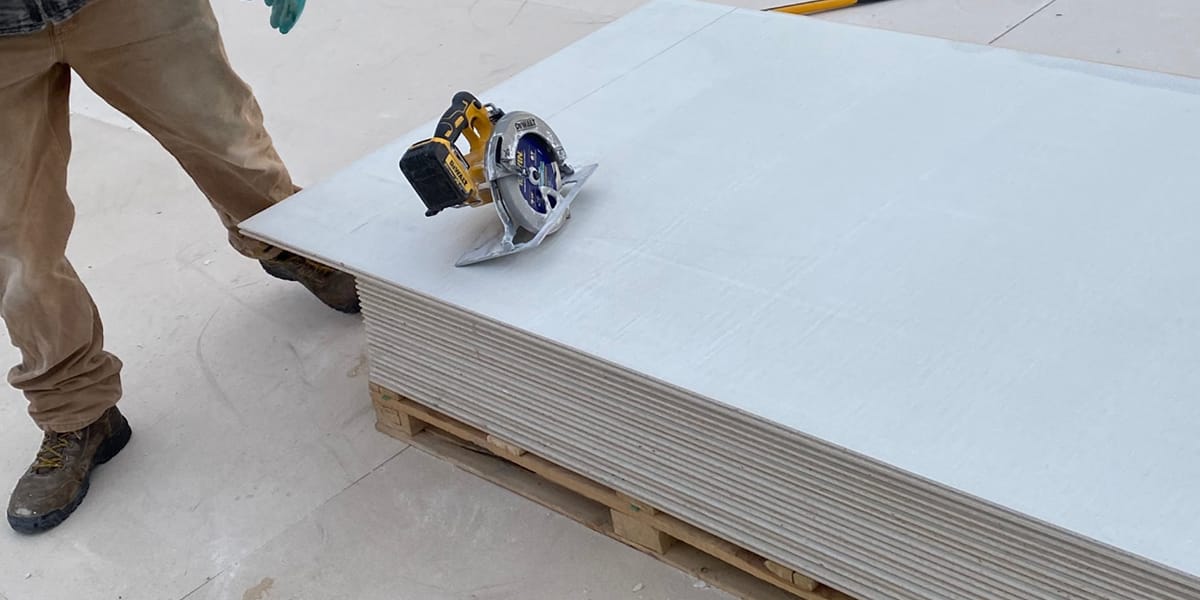 MgO Board Moisture Protection
You want your building to stay dry and safe. Magnesium oxide board works very well in wet rooms. You can put it in bathrooms, kitchens, or laundry rooms. This board does not swell up or bend when it gets wet. It keeps its shape even after getting wet and drying many times. Magnesium oxide board also stops mold from growing. It does not let rot, mildew, or allergens stick to it. Builders use it in places with lots of moisture because it fights mold and mildew.
Here is a simple chart showing how each board handles water:
Material | Moisture Resistance | Water Absorption Rate |
|---|---|---|
MgO Board | Excellent | 0.34% |
Gypsum Board | Poor | 3% |
Gypsum Board in Wet Areas
You might think gypsum board works everywhere, but it does not do well in wet places. Gypsum board soaks up more water than magnesium oxide board. It swells and gets weak when it gets wet. You should not use gypsum board in bathrooms, basements, or other damp rooms. Even special moisture-resistant gypsum board cannot beat magnesium oxide board. Gypsum board can grow mold if the air is humid. If you want something safer, magnesium oxide board is better for wet spaces.
Tip: Always make sure you have good airflow when you put in boards. Use sloped surfaces if water might run over the board. Never put boards where they will be under water all the time.
Water Damage Comparison
There are big differences when you look at water damage. Magnesium oxide board can handle some water without problems. It does not swell or bend. Gypsum board soaks up water fast and can fall apart. You get better results with magnesium oxide board in bathrooms, pools, and outside walls. If you want a board that lasts and keeps your room safe, pick magnesium oxide board for wet places.
Magnesium oxide board: Keeps out water, lasts long, and stops mold.
Gypsum board: Swells, breaks, and grows mold in wet rooms.
Durability and Strength Comparison
MgO Board Durability
You want your walls and ceilings to last for many years. Magnesium oxide board gives you excellent durability. You can use it in busy places like schools, hospitals, and commercial buildings. This board resists cracking and bending, so you do not have to worry about chips or dents. You get a material that stands up to heavy use and keeps its shape. Magnesium oxide board has a compressive strength between 12 and 25 MPa. This means you can trust it to support heavy loads without breaking. The density of magnesium oxide board ranges from 950 to 1050 Kg/M³. High density adds to its strength and durability. You can rely on magnesium oxide board for long-term durability in high-traffic areas.
Magnesium oxide board resists abrasion and impact.
You do not see cracks or bends easily.
You can use it for load-bearing walls.
It keeps its strength and durability over time.
Note: Magnesium oxide board works well in places where you need extra protection against damage. You can choose it for schools, hospitals, and busy offices.
Gypsum Board Durability
Gypsum board gives you a smooth finish for walls and ceilings. You can use it in homes and offices where there is less foot traffic. This board is lighter than magnesium oxide board, but it does not have the same strength. You may notice chips, dents, or cracks if you bump into it. Gypsum board needs extra support for load-bearing walls. You should not use it in places where people touch or hit the walls often. The density of gypsum board ranges from 640 to 800 Kg/M³. Lower density means less durability and strength. You may need to repair or replace gypsum board more often.
Gypsum board is easy to install.
You get a smooth surface for painting.
It does not resist impact as well as magnesium oxide board.
You may see damage in busy areas.
Tip: Use gypsum board in rooms where people do not touch the walls often. You can save money on projects with less wear and tear.
Impact Resistance
You want your walls to stand up to bumps and knocks. Magnesium oxide board gives you better impact resistance than gypsum board. You can use it in hallways, classrooms, and public spaces. This board does not chip or dent easily. You get a strong surface that lasts longer. Gypsum board is softer and more likely to show damage. You may see dents or holes if something hits the wall.
Magnesium oxide board: Strong, resists impact, keeps its shape.
Gypsum board: Softer, shows dents, needs repairs more often.
You may also want to think about sound and heat insulation. Magnesium oxide board provides good thermal insulation, keeping rooms warm in winter and cool in summer. The thermal conductivity coefficient is about 0.216 W/m·K. You get better heat protection than with gypsum board. Gypsum board does not insulate as well, but it does block more sound. Recent tests show gypsum blocks can reach up to 40 dB sound insulation, while magnesium oxide board reaches 30 dB.
Material | |
|---|---|
Magnesium Oxide Board | 30 |
Gypsum Board (Blocks) | Up to 40 |
You should choose magnesium oxide board for strength and durability. You get long-term durability and better protection against damage. Gypsum board works well for quiet rooms where sound insulation matters more than strength.
Tip: Pick magnesium oxide board for busy areas and places where walls need to last. Use gypsum board for rooms where you want better soundproofing.
Price Comparison
 Material Costs
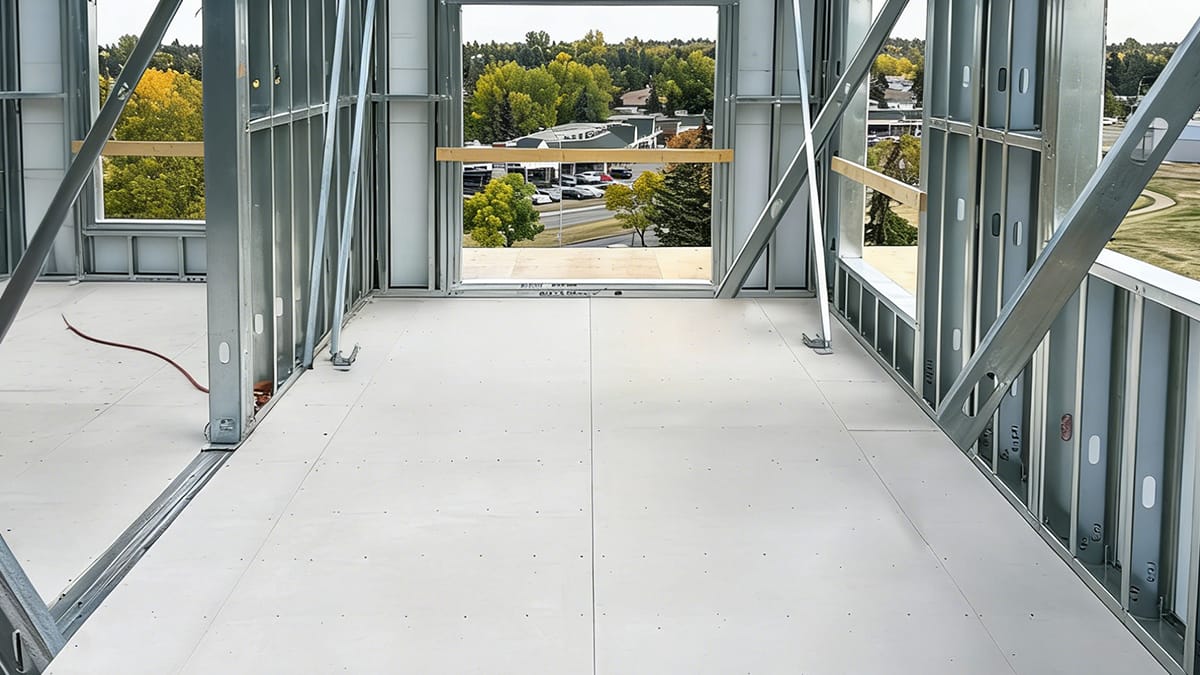 Material Costs
You want to know how much you will spend on each board. The price comparison between magnesium oxide board and gypsum board shows a big difference. Magnesium oxide board costs more for each square foot. Gypsum board is much cheaper. Here is a table to help you see the difference:
Board Type | |
|---|---|
MgO Board | $1.50 – $3.50 |
Gypsum Board | $0.30 – $0.70 |
You will pay a higher initial investment for magnesium oxide board. Gypsum board gives you a lower upfront cost. If you have a tight budget, gypsum board may look like the better choice.
Installation and Labor
You also need to think about how much it costs to install each board. Magnesium oxide board needs special handling. This makes the installation cost a little higher. Gypsum board is common, so most workers know how to install it quickly and for less money.
Material | Installation Cost |
|---|---|
Magnesium Oxide Board | Slightly higher due to specialized handling |
Gypsum Board | Lower due to common usage |
You may spend more on labor with magnesium oxide board. Gypsum board saves you money on installation.
Long-Term Value
When you look at the total cost of ownership, magnesium oxide board gives you better value over time. Here are some facts to help you decide:
Magnesium oxide board lasts 25-50 years. Gypsum board lasts 10-15 years.
You do not need much maintenance with magnesium oxide board. Gypsum board can crack or get soft, so you may pay more for repairs.
The initial cost of magnesium oxide board is higher, but you save money in the long run.
Magnesium oxide board can have problems in high humidity. You may see mold, stains, or even damage if the area stays wet.
You should think about cost-efficiency for your project. Magnesium oxide board costs more at first, but you may save money over many years. Gypsum board is cheaper to buy and install, but you may pay more for repairs and replacements.
Tip: Always check the room conditions before you choose a board. Wet areas can cause problems for both boards, but magnesium oxide board needs extra care in high humidity.
Environmental Impact
MgO Board Sustainability
When you pick magnesium oxide board, you help the earth. This board takes in carbon dioxide while it dries. It needs less energy to make than many other building materials. You can recycle magnesium oxide board after you use it. Some people use it again in new buildings or even as fertilizer. The board does not have dangerous stuff in it, so it is safer for nature.
Takes in CO2 while drying
Needs less energy to make
Can be recycled or used again
No dangerous materials
You can look at this table to see how magnesium oxide board and concrete are different:
Aspect | Magnesium Oxide Board | Concrete (CaO) |
|---|---|---|
CO2 Emission (kg/t) | 340 | 740 |
Mining CO2 Emission (kg/t) | 60 | 60 |
Extracting CO2 Emission (kg/t) | 200 | 600 |
Shipping CO2 Emission (kg/t) | 140 | 60 |
Curing Process | Takes in CO2 | N/A |
Contains Hazardous Materials | No | Yes |
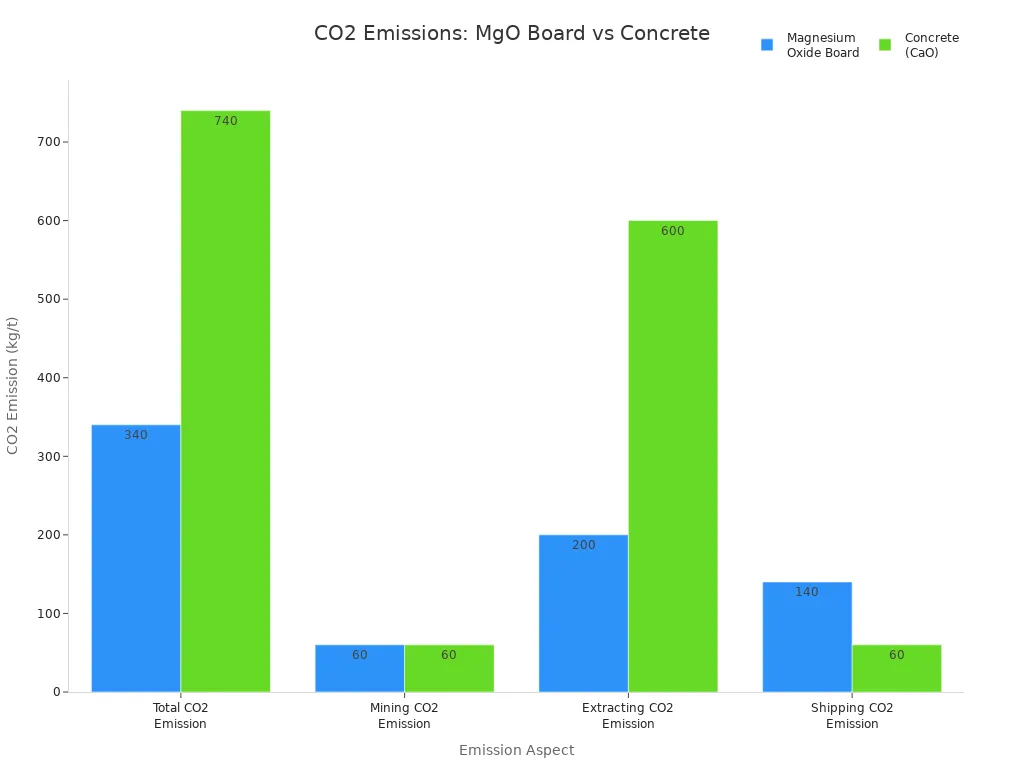
Scientists say the carbon footprint of magnesium oxide board changes based on how and where it is made. The amount of CO2 can be from 1.6 to 12.7 kg for each kilogram. Even with these changes, magnesium oxide board usually has a smaller carbon footprint than most other materials. This makes it a good choice for people who care about the planet.
Gypsum Board Footprint
You see gypsum board in lots of buildings. Making gypsum board uses more energy than making magnesium oxide board. The process puts more carbon dioxide into the air. It is not easy to recycle old gypsum board. Most old gypsum boards get thrown away in landfills. When gypsum breaks down, it can let out gases that hurt the earth. Some gypsum boards have extra things in them that are not good for nature.
Uses more energy to make
Makes more CO2
Hard to recycle
Can let out bad gases in landfills
Eco-Friendly Comparison
You want to choose a board that is good for the earth. Magnesium oxide board is better because it makes less carbon and can take in CO2. You can recycle it and use it again. Gypsum board makes more trash and pollution. It is harder to recycle and can hurt the earth when you throw it away.
🌱 If you want to help the planet, magnesium oxide board is the best pick for green building projects.
Applications and Limitations
Where MgO Board Excels
 Where MgO Board Excels
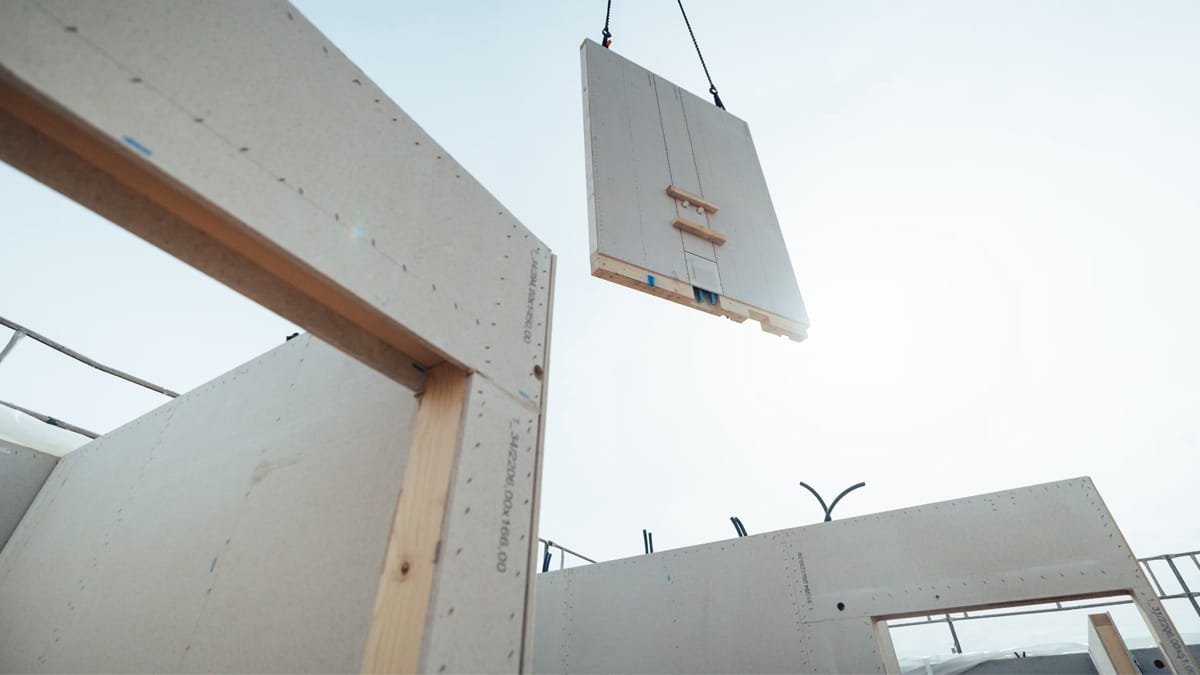
You can use magnesium oxide board in many places where strength and safety matter. This board works well in commercial buildings for walls and ceilings because it resists fire. You can use it in warehouses and storage spaces to keep out moisture. In homes, you can put it in bathrooms and kitchens to stop mold and mildew. If you live near the coast or in a place with tough weather, magnesium oxide board stands up to wind and rain. You can also use it in factories and high-traffic areas because it does not crack or dent easily.
Common uses for MgO board:
Commercial walls and ceilings
Warehouses and storage rooms
Bathrooms and kitchens in homes
Coastal homes and places with harsh weather
Factories and busy public spaces
Tip: Magnesium oxide board also helps with energy efficiency when used in walls and roofs.
Gypsum Board Best Uses
You should choose gypsum board if you want a low-cost and easy-to-install wall covering. This board is great for projects where you need to save money. You can finish it quickly, which helps you finish your project faster. Gypsum board gives you a smooth surface for painting or wallpaper. It works well in dry rooms like bedrooms, living rooms, and offices. You can use it for quick renovations or when you want to keep labor costs low.
Best uses for gypsum board:
Budget-friendly projects
Dry rooms (bedrooms, living rooms, offices)
Quick renovations
Spaces where you want a smooth finish
Gypsum board is not good for wet or high-impact areas. It works best where you do not expect much moisture or heavy use.
Board Limitations
Both boards have some drawbacks you should know about. Magnesium oxide board costs more than gypsum board. You may find it harder to get in some places, and shipping can take longer. This board is strong but can be brittle, so it may crack if you drop it. It does not hold nails as well as wood boards. You may also see rough surfaces, which can make painting or finishing harder. Sometimes, you may notice powdery or peeling spots, or even corrosion on metal parts.
Gypsum board has its own limits. It does not work well in wet rooms. Water can make it swell, soften, or grow mold. It is not strong enough for load-bearing walls. If you hit it hard, it can dent or break. In humid places, it may sag or show stains.
Board Type | Main Limitations |
|---|---|
MgO Board | Higher cost, brittle, rough finish, harder to find |
Gypsum Board | Weak in wet areas, dents easily, not load-bearing |
Always match the board to your project needs. Think about cost, location, and how much wear the walls will get.
You see magnesium oxide board as the top performer for 2026. It stands out for fire resistance, moisture protection, and eco-friendliness. You get strong walls in wet or high-traffic areas. Gypsum board costs less and works well for dry, low-impact spaces.
Magnesium oxide board is growing in use because builders want safer, greener materials.
You may face higher costs and tougher installation with MgO board, but you gain long-term value.
Think about your project’s needs, budget, and where you will use the board before you decide.
FAQ
What is the main difference between magnesium oxide board and gypsum board?
Magnesium oxide board is stronger than gypsum board. It does not get damaged by water. Gypsum board costs less money. It works best in dry rooms. Magnesium oxide board lasts longer in tough places.
Can you paint or finish magnesium oxide board easily?
You can paint magnesium oxide board. The surface can feel rough sometimes. You should use a primer first. This helps make the finish smoother before painting.
Is magnesium oxide board safe for indoor air quality?
Magnesium oxide board is safe for indoor air. It does not let out bad chemicals or gases. Builders use it for healthy homes and schools.
Does gypsum board work in bathrooms or kitchens?
Do not use gypsum board in wet rooms. Water can hurt the board and cause mold. Magnesium oxide board is better for bathrooms and kitchens.